By Nelly Nyangorora
KIGALI, Rwanda – African countries must move from reacting to food and climate shocks to financing food systems resilient enough to withstand them, leaders and experts said at the 20th Africa Food Systems Forum in Kigali.
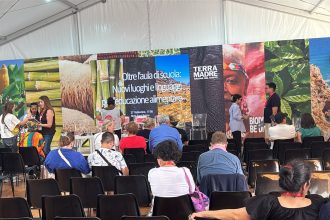
Held under the theme “Investing in Africa’s Agri-Food Systems: Nourishing Nations, Growing Jobs, Building Resilience,” the five-day forum brought together policymakers, investors, researchers, farmers, development actors and entrepreneurs around a central question: Africa has the ideas and resources to transform its food systems, but can it finance and scale them fast enough?
Amath Pathe, managing director of Africa Food Systems, said Africa’s exposure to climate shocks, conflict and global supply-chain disruptions should not overshadow its potential. The continent has vast arable land, abundant water resources and a young population that could drive jobs, businesses, better nutrition and greater food security.
“Africa has whatever is needed to be sovereign in terms of food and also be able to feed the world,” he said.
But unlocking that potential will require capital, risk-management tools and policies that make agriculture and food businesses more attractive to investors. Pathe pointed to about 600 million hectares of arable land as one of Africa’s major assets, but said the continent must now match resources with delivery.
“We need investment,” he said.
The urgency is growing in a volatile global environment. Conflicts in the Middle East and the Russia-Ukraine war have shown how quickly geopolitical disruptions can ripple through food, fertiliser and other supply chains, while erratic weather is threatening production and increasing losses for farmers, processors and governments.
For Africa, climate change is no longer only an environmental concern. It is an economic and investment risk.
Pathe said Africa remains among the regions most vulnerable to climate impacts, with limited capacity to adapt. “Adaptation is at the centre of the discussion, climate finance, climate resilience, but also mitigation,” he said.
He said investors will continue to view agriculture as too risky unless climate risks are built into investment planning and backed by mechanisms that reduce potential losses. “The private sector would not take the risk if that is not calculated,” he said.
That is why insurance, climate-risk preparedness and financing for loss and damage are becoming central to Africa’s food-system strategy. The continent has already established Africa Risk Capacity, a risk-pooling mechanism designed to help countries respond to extreme weather disasters. At farm level, insurance products are expanding to cover crops and livestock, while better weather information is helping farmers decide when to plant and harvest.
Technology is also part of the response. Drones, geographic information systems, weather-monitoring platforms and digital advisory tools are increasingly being used to improve planning and reduce risk. But delegates warned that technology alone cannot solve financial, institutional and structural problems.
That message carried into a session on bundled services, where researchers, practitioners and government officials argued that farmers rarely face one problem that can be solved by a single intervention.
Rwanda’s Agriculture Minister, Dr Telesphore Ndabamenye, said bundling services requires a holistic policy approach.
“Information alone does not solve labour shortages. Inputs are of limited value if farmers cannot afford them or do not know how to use them. Higher production can also create new problems if farmers lack reliable markets,” he said.
Dr Patrick Karangwa, Director General of Agriculture Modernisation in Rwanda, said the stronger approach is to connect complementary services around the farmer, including finance, inputs, insurance, advisory support, mechanisation, markets and technology.
AfricaRice’s digital RiceAdvice tool offered one example. The tool gives farmers personalised recommendations on inputs and production practices, but advice becomes useful only when farmers have the resources and support to act on it.
AfricaRice has therefore experimented with linking digital advice to credit, market access and extension support.
One Acre Fund, which has worked with smallholder farmers for two decades, focuses on areas where it has built strong capabilities, including farmer extension, financing and supply chains, while partnering with others on seed technology, digital tools, markets and specialised services.
The model is deliberately collaborative because no single organisation can provide everything farmers need. The summit’s focus on food systems reflects that reality, treating agriculture as a chain of connected actors, from governments, researchers and financial institutions to technology companies, development partners, farmer organisations, aggregators and private businesses.
Panelists at the AFS Forum breakaway session on bundled solutions for farmers said funders must move away from isolated projects and back solutions that address the connected constraints facing farmers, processors and food enterprises.
The discussion reflected a broader shift in Africa’s food-security debate toward a food-systems agenda linking nutrition, energy, climate, investment, jobs, trade, infrastructure and business.
“Food security can no longer be addressed simply by producing more food. Energy is needed to power production and processing. Roads, storage and logistics are needed to move food to markets. Finance is needed to help farmers and businesses invest. Climate resilience is needed to protect those investments. Nutrition must remain central to whether food systems are actually improving lives,” Ndabamenye said.
For entrepreneurs, the investment agenda is immediate. Martha Akolbila, a young processor from Ghana, said her business is already creating jobs and turning agricultural commodities into consumer products, but lacks the capital to move from labour-intensive production to mechanised processing.
She hopes the forum will connect small enterprises like hers with investors and policymakers who can support machinery, secure infrastructure, market access and marketing.
“We need investment to support businesses like ours, improve our access to markets, and help us with marketing. We know what we are doing. What we need now is the support to take it to another level,” she said.
Her plea captures the challenge facing the forum as it marks its 20th anniversary. Africa has held many conferences, made many declarations and tested promising ideas, from improved seeds and extension services to insurance, aggregation, value addition and AI-enabled advisory tools.
The evidence in Kigali suggests many of these interventions can work when the pieces fit together. But thousands of farmers and small food businesses still struggle to move from promising pilots to sustainable enterprises.
The next phase, entrepreneur like Rokiatou Traore of heroualliance, a youth who has invested in agroforestry, said, must be about financing, coordination, and accountability. Researchers, on the other hand, called for more evidence on which combinations of services work for different groups, including women and young people, and which partnerships can deliver them efficiently. They also noted that many successful local models remain undocumented, leaving scalable businesses without the visibility needed to attract investment.