KIGALI – The Africa Food Systems Forum 2026 opened with a $231 million financing package from the UN’s International Fund for Agricultural Development, but lawmakers warned that external support will not be enough to deliver Africa’s new food agenda.
For young agripreneurs at the forum, many seeking machinery, markets and capital, the bigger question was whether parliaments can turn continental promises into national budgets, laws and investable opportunities.
IFAD’s package includes $200 million in mixed public-private financing for Kenya, Tanzania, Rwanda and Uganda, $10 million for small agribusinesses, and $21 million for farmers’ organisations in Nigeria.
The funding is meant to support the journey from farm to market, in line with the Kampala Declaration, the African Union’s ten-year plan to transform how the continent grows, processes and trades food.
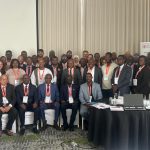
But inside the Kigali Convention Centre, at a roundtable of the African Food Systems Parliamentary Network, MPs said financing farmers at the farm gate will achieve little if roads, electricity, storage, processing plants, and trade rules remain weak.
IFAD’s approach shows the scale of capital required, but legislators said the harder task is matching such financing with laws and budgets that attract pension funds, banks, and private investors.
“The test for Parliament is to turn continental targets into national budgets, investable policies and measurable results,” said Godfred Seidu Jasaw of Ghana, who chaired the roundtable.
He said lawmakers can approve spending, pass laws, and oversee public money, and challenged them to use those powers to strengthen food security.
That test is sharper under the Kampala Declaration, which asks parliaments at national, regional and continental levels to align laws, budgets and oversight with Africa’s food transformation goals.
Anthony Kamoto of Malawi said the challenge begins with political priorities. National budgets, he argued, still favour visible infrastructure projects, while agriculture, despite its role in food security, jobs and stability, is often treated as a side issue.
His concern reflected a wider gap; that even when outside funders commit hundreds of millions of dollars, national budgets often fail to connect food spending across ministries, value chains and long-term development plans.

The declaration also renews the Maputo and Malabo commitment that governments should spend at least 10% of annual budgets on agriculture and food systems, while mobilising more public and private capital.
John Mutunga of Kenya said agriculture must sit at the centre of national economic planning, with investment flowing into irrigation, power, storage, processing and trade. Margarida Adamane of Mozambique warned that local investment will stall unless working value chains connect farmers to buyers and exporters.
Delegates proposed legal reforms to allow pension funds to invest in agricultural infrastructure. Gladness Salema of Tanzania also called for better farming data and creative collateral systems so local banks can lend to the sector with confidence. The proposals speak directly to Kampala’s goal of mobilising $100 billion in public and private investment by 2035.
On oversight, several delegates said a lawmaker’s job does not end when the budget is passed. Mary Khembo of Malawi said legislators must track whether funds are released, whether they reach the intended people and whether they deliver results.
Modou Lamin B. Bah of The Gambia was blunt: “We must follow the money through release, procurement, implementation, delivery, and results.”
Françoise Umu of Rwanda urged MPs to search budgets for hidden resources and back youth-led businesses through parliamentary motions, saying inclusion will require deliberate financing choices to achieve the envisaged 30pc of youths in the food system.
East African Legislative Assembly member Gideon Gatpan Thoar called for harmonised regional rules on seeds, fertilisers and plant health standards to unblock cross-border food trade.
His appeal reflects Kampala’s 2028 deadline for member states and regional economic communities to weave their commitments into national and regional food investment plans.
Closing the roundtable, former Tanzanian Prime Minister Mizengo Pinda urged legislators to build bridges between parliament and the executive, warning that declarations only matter if they are carried out.
“Africa possesses substantial agricultural potential,” he said. “If there are weak areas, let’s hit them and strengthen them. We want to feed ourselves well.”
The forum, marking its 20th edition, ran from 31 August to 4 September at the Kigali Convention Centre under the theme “Investing in Africa’s Agri-Food Systems: Nourishing Nations, Growing Jobs, Building Resilience.”
The setting is significant because the pledges come as Africa’s food systems face rising fertiliser costs, degraded soils, climate shocks and conflict, while countries enter the new CAADP-Kampala decade and prepare national investment plans.