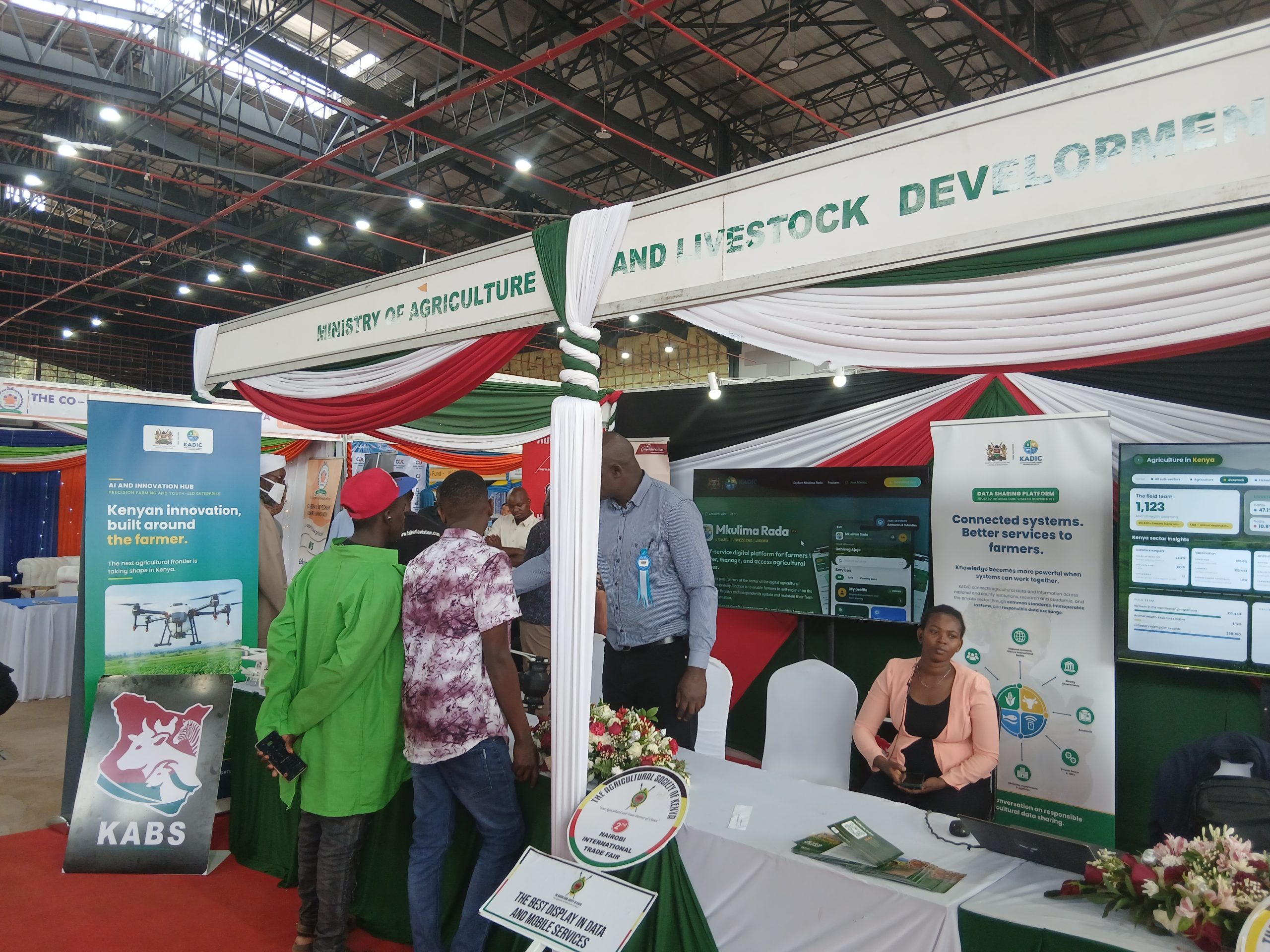
NAIROBI, KENYA — Technology is becoming part of everyday farming, as shown by the growing number of digital tools displayed at this year’s Nairobi Trade Fair.
The event featured agricultural solutions designed to increase food production and improve animal health.
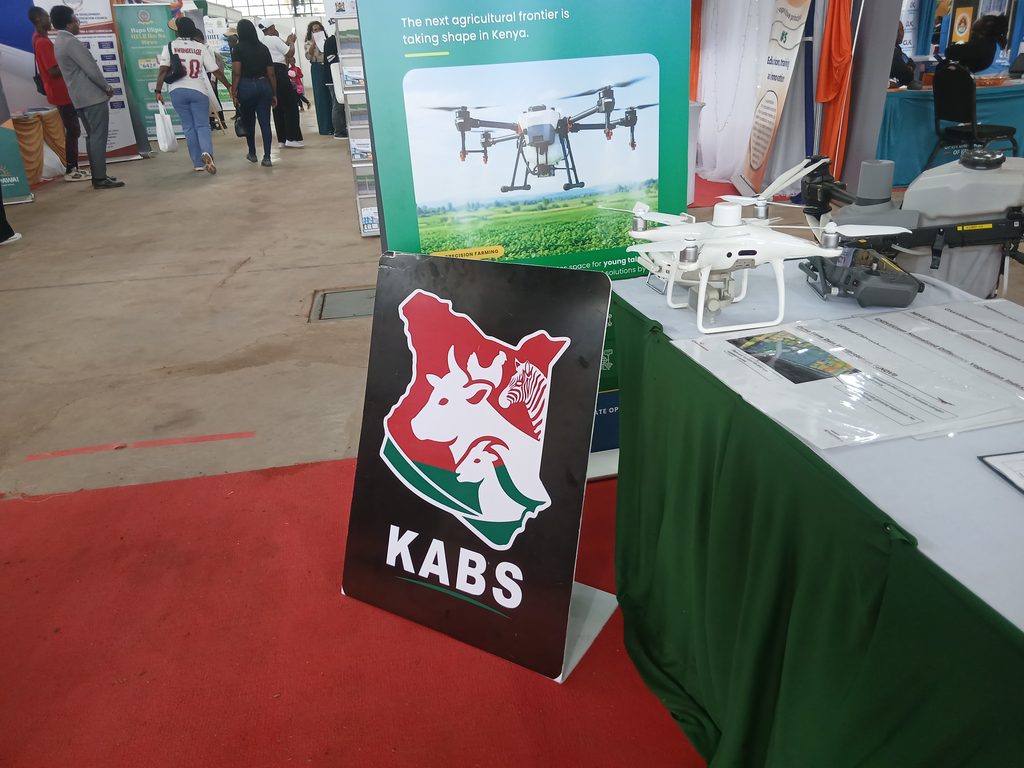
At the Ministry of Agriculture and Livestock Development pavilion, exhibits included the Kenya Animal Biosurveillance System (KABS), which helps authorities track livestock diseases, and drones that monitor crops, detect problems, spray fields, and sow seeds.
Together, these technologies can protect livestock, support precise crop management, and reduce losses through early detection.
The upgraded KABS app aims to improve livestock disease reporting and information exchange between field officers, county teams, and national authorities.
According to Dr Collins Kevin, it is intended to reduce the time between identifying a suspected case and alerting the relevant authorities.
“This app targets animal health practitioners on the ground,” Kevin said. Users need an Android phone and must be onboarded by their county veterinary head. They record and submit cases from the field, after which county teams review them through dashboards. National authorities can then coordinate investigations and consider vaccination campaigns, quarantines, or trade controls, depending on the disease and available evidence.
The app is linked to a centralised dashboard that displays reported data in graphs and tables, allowing veterinary personnel at every level to visualise the disease situation.
KABS digitises reporting between field practitioners, county veterinary teams, and national authorities.
Livestock contributes more than 12 percent of Kenya’s GDP and supports millions of livelihoods, especially in pastoralist, semi-arid, and mixed smallholder communities.
The sector faces persistent threats from endemic and high-impact diseases. Weather shocks, including prolonged droughts and El Niño, can increase vectors and spread illnesses such as Rift Valley fever.
“The app supports multisectoral collaboration between agencies and sectors,” Kevin said. “It includes forms on vaccination, wildlife, and veterinary public health, supporting government planning on animal health.”
The fair also showcased agricultural drones. In partnership with the ministry, Fahari Aviation displayed one model.
Brian Ayogo said drones support the food sector’s broader value chain.
“We have two different kinds of drones,” Ayogo said. One analyses crop health, measuring indicators such as chlorophyll levels, pest infestation, and soil moisture. Its specialised cameras can reveal differences in plant health, moisture, and possible signs of pests or disease that ordinary cameras may miss.
The images become maps showing which areas may need water, treatment, or inspection, helping farmers identify problems before they spread or reduce yields.
Other drones can spray crops or sow seeds, Ayogo said. Depending on the model, they may carry up to 50 litres of liquid or 50 kilograms of solid material, covering fields without heavy machinery moving over soil and crops.
Mapping data enables variable-rate application, directing different amounts of seed, fertiliser, or crop protection to specific areas.
With reliable data and skilled operation, drones can apply seed, fertiliser, or crop treatments only where needed, reducing waste and enabling faster responses.
Results still depend on weather, field conditions, crop type, operator skill, and data quality.
Because Kenyan agriculture depends heavily on rainfall, climate volatility threatens food security and pastoral livelihoods. KABS and agricultural drones can help bridge the gap between field monitoring and national policy, offering a model for data-driven, climate-resilient agriculture across East Africa.
The 125th Nairobi Trade Fair offered a glimpse of food production’s future, where adapting to evolving technology will be critical.
This year’s theme was “Promoting Climate-Smart Agriculture and Trade Initiatives for Sustainable Economic Growth.”