By Victor Moturi
As countries around the world step up efforts to combat climate change and marine pollution, women in Kenya are taking a leading role in restoring degraded coastal ecosystems. In Mombasa County, a community-led initiative is encouraging women and young people to plant indigenous trees along the coastline,an effort that is not only protecting the environment but also creating sustainable livelihoods.
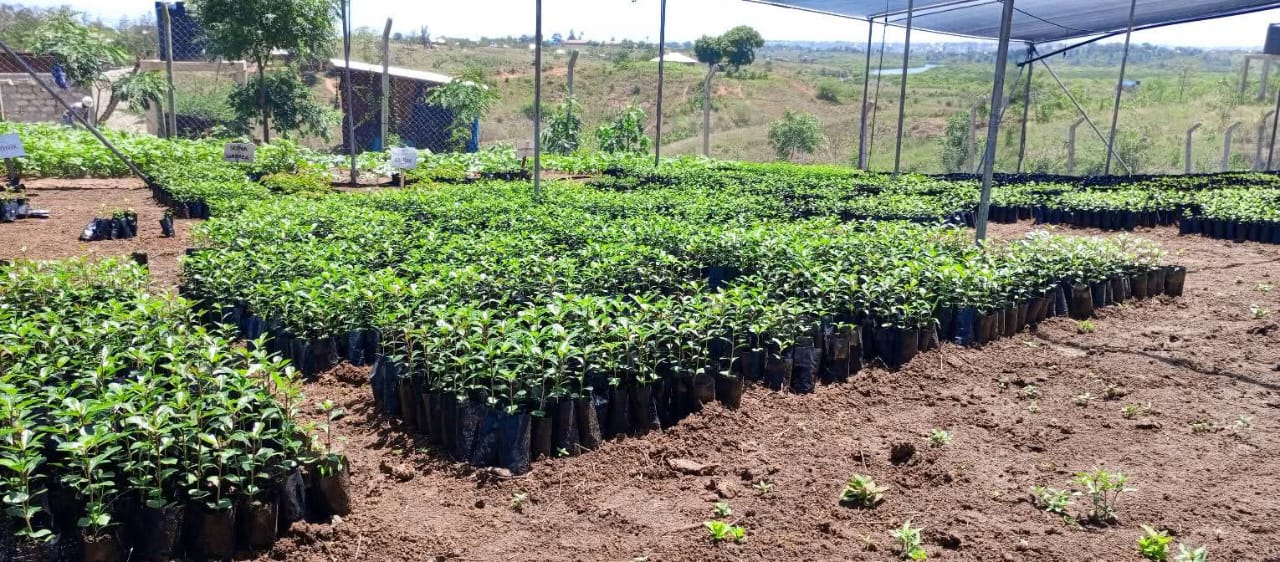
In Marimani Village, located in Mombasa County, dozens of women and youth gather outside Marimani Secondary School to receive indigenous tree seedlings for planting in degraded coastal areas. Their goal is to restore native vegetation that has been lost over the years due to deforestation and human activities.
For Sharon Mumo, a farmer and beekeeper, the project has brought significant economic and environmental benefits.
“The increase in indigenous trees has attracted more bees, which has improved honey production and increased my family’s income,” she says.
The initiative was launched about two years ago by the women’s group Amani Kenya. Besides restoring coastal ecosystems, the project enables community members to earn income through the production and sale of indigenous tree seedlings.
Faiza Katana, one of the project coordinators, says indigenous trees play a critical role in protecting both terrestrial and marine ecosystems.
“In recent years, many coastal forests have been destroyed through the cutting of indigenous tree species such as mangroves, mahogany, tamarind and other native trees. At the same time, plastic pollution has continued to threaten marine life. Restoring indigenous trees helps protect the soil, conserves biodiversity and strengthens resilience to climate change,” Katana explains.
The initiative has expanded beyond Marimani Village. In partnership with government institutions and local schools, the group distributes seedlings, organizes community cleanup campaigns and restores degraded coastal landscapes.
Environmental education has also become a key component of the programme.
According to Violet Monyoncho, an environmental patron at Marimani Secondary School, involving students in conservation activities is helping nurture a new generation of environmental stewards.
Deputy Principal Sherline Muteti adds that the project has strengthened environmental awareness among learners while improving the condition of the school’s surroundings.
The need for such initiatives is becoming increasingly urgent.
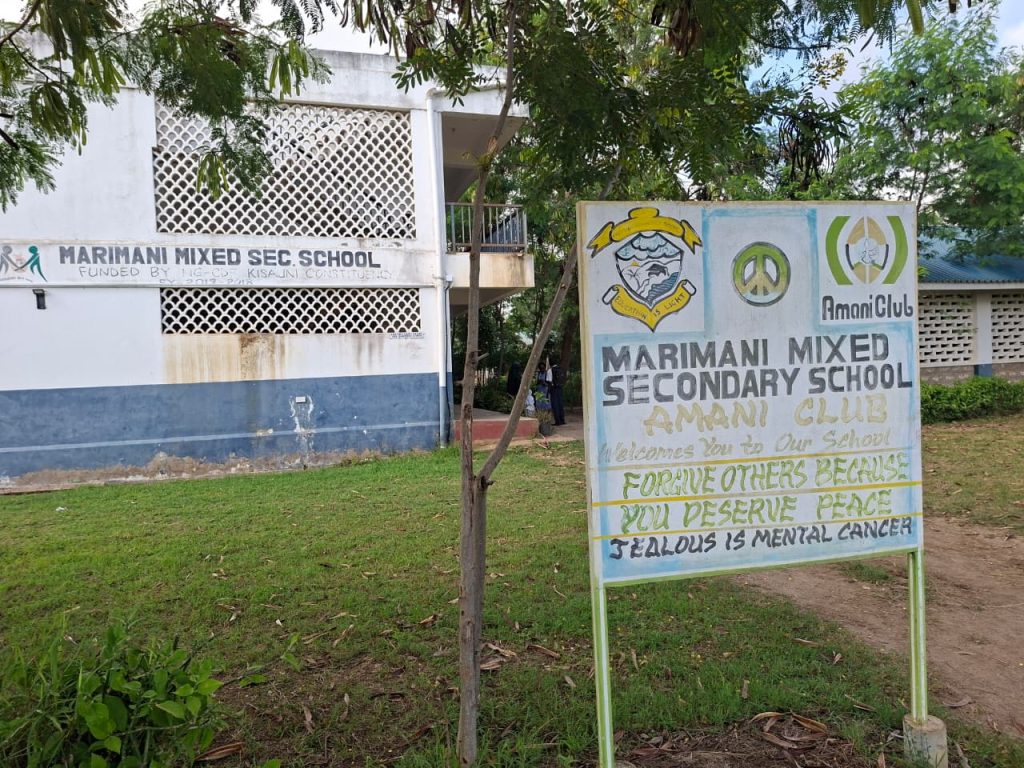
Marimani Mixed Secondary – Mombasa Kenya
According to the International Maritime Organization (IMO), Kenya’s coastline particularly around Mombasa and Malindi is experiencing growing environmental degradation. The organization estimates that nearly 88 percent of marine litter originates from land-based sources, including residential areas, commercial activities and tourism facilities.
Amos Kiule, an environmentalist with Amani Kenya, believes community driven conservation initiatives provide practical solutions to these challenges.
“Communities living along the coast are the first line of defence in protecting marine ecosystems. Empowering women and youth to restore indigenous vegetation creates long term environmental and economic benefits,” he says.
The project also complements global commitments made during the 11th Our Ocean Conference, hosted in Mombasa in June this year. The conference brought together world leaders, policymakers and marine conservation experts to discuss ocean protection and the blue economy.
The meeting resulted in more than 320 voluntary commitments and US$6.4 billion in pledged investments to support marine conservation, reduce pollution and strengthen the blue economy.
Kevin Gona, a marine environmental expert from the Kenya Maritime Authority, says partnerships between governments, communities and development organizations are essential for safeguarding marine ecosystems.
As climate change and environmental degradation continue to threaten coastal communities, the women of Marimani are demonstrating that locally led conservation can deliver meaningful environmental and economic results. Their work highlights how restoring indigenous forests can strengthen biodiversity, improve livelihoods and contribute to a healthier marine environment for future generations.